

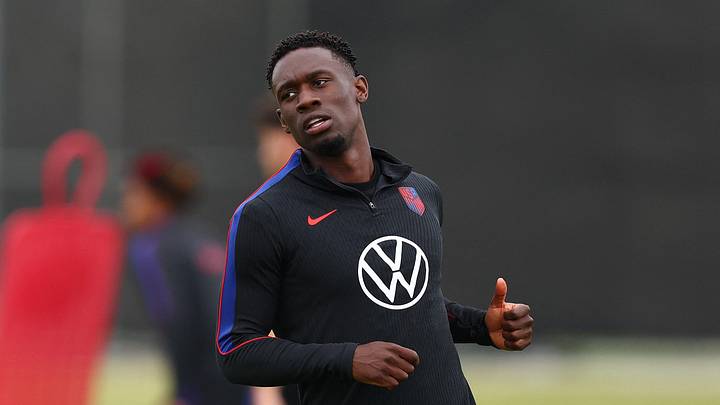
Last night, the United States had to hang on to beat Bosnia and Herzegovina in the World Cup after Folarin Balogun was sent off in the second half with a controversial red card. VAR was used to show Balogun putting his studs into the ankle of the Bosnia and Herzegovina player, but it was a challenge that, in real speed, seemed like nothing and was only made to look as bad as it did because of slow-motion replay.
Florida fans were given a bit of a flashback to an infamous 2024 call in a similar case, where replay intervened when it never needed to.
USA red card echoes infamous Trikweze Bridges ejection
If we rewind to 2024 against Texas A&M, Trikweze Bridges made a tackle on a leaping Aggies receiver that caused no one to blink in real time. Replay then stopped the game and ejected Bridges for targeting, even though his helmet was squarely on the butt of the Texas A&M player. Bridges was ejected, and the drive for Texas A&M continued.
That call wasn’t why Florida lost, but it has parallels to the red card from last night, in that the slow-motion replay went hunting for problems that never existed in the first place. Oftentimes, if one slows a play down, they can go hunting for any ejection-worthy action that they want to find.
But whether it’s targeting or a red card, last night’s incident highlights an utter lack of consistency that comes from replay assistants. As many have pointed out, Messi had a very similar challenge to Balogun earlier in the World Cup, and play was never stopped, and the ref never blinked. And no, Messi’s challenge shouldn’t have been a red card either because at real speed it wasn’t a violent and reckless challenge. Just like in real speed, the tackle from Bridges wasn’t some reckless lowering of the head.
What makes these types of calls even worse is that the powers that be come out after the game and will try to gaslight everyone into believing the right call was made. In the case of Bridges, SEC officials came out and claimed the right call was made. In the case of Balogun, it’s only a matter of time before FIFA officials do the same.
It’s not to say that replay has no place in college football or soccer, but there needs to be some type of middle ground where plays like this don’t have to be an all-or-nothing punishment because of the optics of a slow-motion freeze frame.
 Add us as a preferred source on Google