

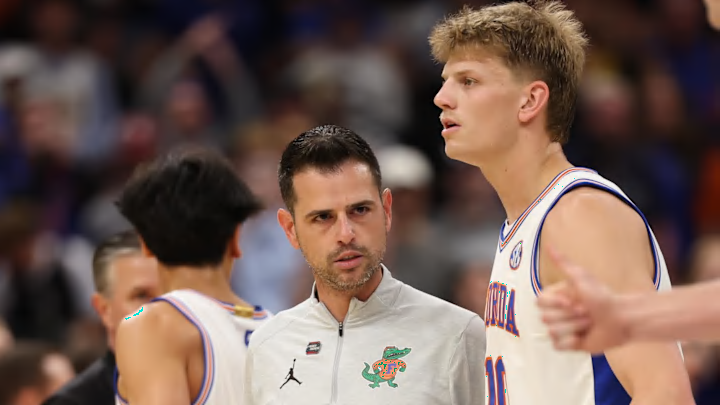
Entering March Madness, it felt like Florida was destined to repeat as national champions. Their front court was among the most dominant in the country, and the guard play had improved to a point where it felt like the Gators could take on anyone in the country.
Instead, the Gators suffered a shocking defeat at the hands of Iowa to end their season in the second round. Florida became the eighth defending national champion out of the last nine to not advance past the second round of the tournament.
But there was another piece of destiny in place that it looked like Florida might be able to overcome, only for Florida to falter for the same reasons that put them in that place to begin with.
Florida was doomed from Week Six
In the Week Six AP Top 25 poll, Florida came in ranked 18th. The Gators were coming off their loss to Duke, in addition to prior losses to Arizona and TCU.
That ranking was significant because, since 2004, the eventual national champion has been in the top 12 of the Week Six AP Top 25. And if we go back even further, the only team since 1990 to buck this trend was the 2003 Syracuse squad led by Carmelo Anthony.
It may seem like a silly barometer, but by week six, there have been enough non-conference matchups to get a solid idea of who the true contenders are, before teams ultimately close out the end of December with a lighter non-conference slate and, from there, are sheltered into their conference play.
And what caused Florida to lose to Iowa was the same thing that caused Florida to lose to Arizona, TCU, and Duke:
An inability to close out close games.
Against Arizona, Boogie Fland had a wide-open three-pointer to tie the game, but missed. Against TCU, the Gators had the ball with 1:10 to play in a tie game before a turnover, a TCU basket, and a missed three from Alex Condon sealed their fate. Against Duke, Fland made the go-ahead three-pointer only for a defensive breakdown, followed by not even getting a shot off, which led to Florida’s defeat.
That story played out once against Iowa as Florida had the ball with the lead with 1:10 to go, only to let it slip away with a combination of turnovers, missed shots, and a defensive breakdown. The dagger was not getting a final shot off.
Florida will look to regroup and reload for the 2026-27 campaign, but it’s a reminder that flaws that pop up during non-conference play don’t go away; they just get suppressed until they don’t.
 Add us as a preferred source on Google